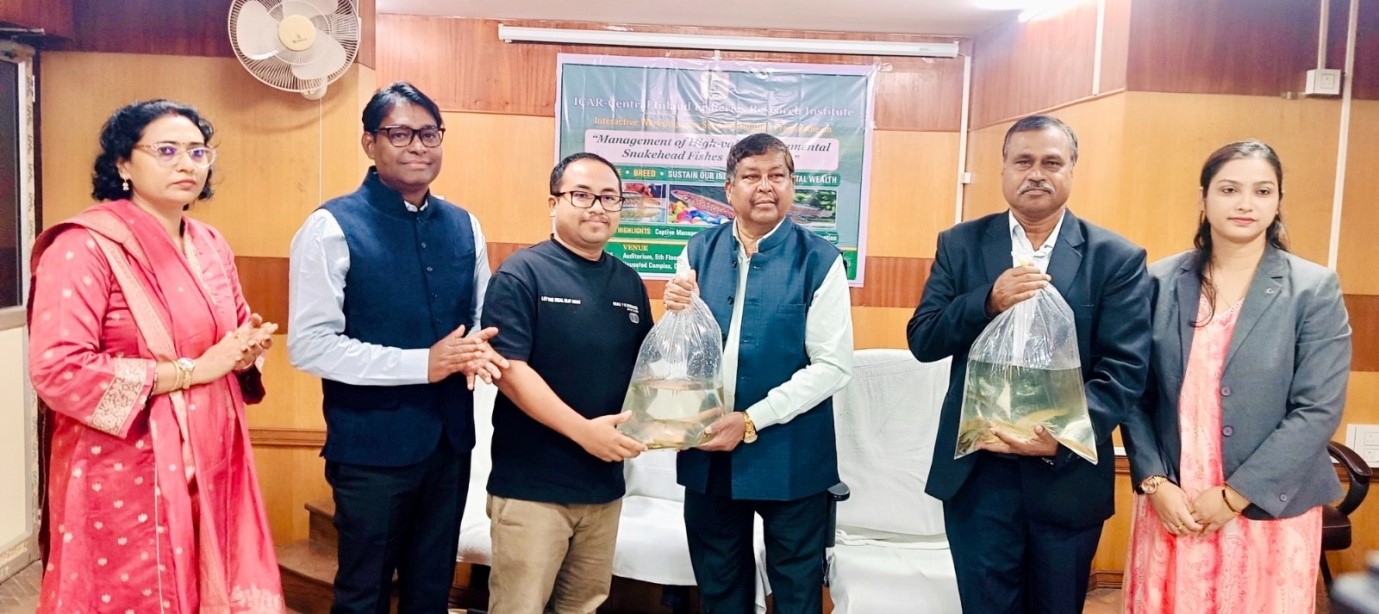
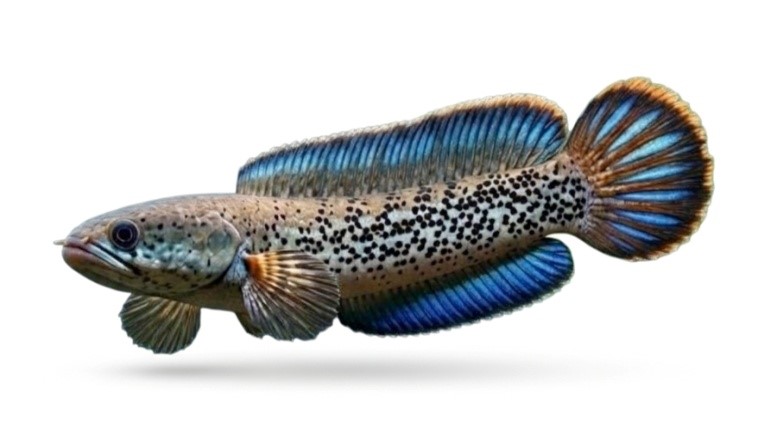
In a significant step towards conserving indigenous ornamental fish diversity and promoting sustainable fisheries-based livelihoods in Northeast India, the ICAR-Central Inland Fisheries Research Institute (ICAR-CIFRI), Regional Centre, Guwahati, organized a Workshop-cum-Seed Distribution Programme on “Management of High-Value Ornamental Snakehead Fishes in Captivity” on 17 November 2026. The major highlight was the distribution of institute-produced, captive-bred fingerlings of Channa stewartii (locally known as Kola Cheng) among selected farmers for on-farm rearing trials. The initiative aims to promote scientific captive propagation, reduce dependence on wild-caught stocks and create alternative livelihood opportunities.
Organized under the ICAR-All India Network Project (AINP) on Ornamental Fish Breeding and Culture, the programme was conducted under the overall guidance of Dr. Pradip Dey, Director, ICAR-CIFRI, Barrackpore, and Dr. S. K. Majhi, Head, ICAR-CIFRI Regional Centre, Guwahati. Around 50 participants, including officials from the Departments of Fisheries and Forests, representatives of Aaranyak and the College of Fisheries, fish farmers, entrepreneurs, media personnel, scientists and technical staff, attended the workshop.
Dr. Niranjan Kalita, Vice-Chancellor, Assam Veterinary and Fishery University, graced the inaugural session as Chief Guest. The dignitaries emphasized the importance of conserving endemic snakehead species of Northeast India through scientific research, captive breeding and sustainable seed production. Dr. S. K. Majhi highlighted the emerging potential of ornamental fisheries in the region and stressed that developing reliable captive breeding technologies would reduce pressure on natural fish populations while ensuring a sustainable supply of quality seed. Dr. Suman Kumari, Senior Scientist, ICAR-CIFRI, presented the objectives of the workshop. An information leaflet and poster on ornamental snakehead fishes were also released.
Dr. Pradip Dey, Director, ICAR-CIFRI, emphasized that “Scientific captive breeding of indigenous ornamental fish species such as Channa stewartii offers an important opportunity to integrate biodiversity conservation with livelihood development. Developing and disseminating reliable breeding and seed production technologies can reduce dependence on wild fish stocks, promote responsible utilization of indigenous aquatic resources and create new entrepreneurial opportunities for rural youth and fish farmers in the Northeast.”
The technical sessions focused on species conservation, domestication, captive breeding, seed production and scientific rearing of high-value ornamental snakeheads. Expert lectures were delivered by Dr. B. K. Bhattacharjya, Principal Scientist; Dr. Suman Kumari, Senior Scientist; and Dr. Niti Sharma, Senior Scientist, ICAR-CIFRI. Discussions covered the market potential of indigenous snakeheads, breeding and rearing protocols, captive propagation of Channa stewartii, nutrition, water-quality management and fish health care. Participants actively interacted with the resource persons and sought technical guidance on scientific management practices.
The distribution of captive-bred Channa stewartii fingerlings for field-level trials is expected to facilitate the adoption of research-based rearing technologies, encourage responsible ornamental fish production and generate alternative livelihood and entrepreneurship opportunities. The initiative reinforces ICAR-CIFRI's commitment to translating scientific innovations into practical solutions for biodiversity conservation and sustainable development of ornamental fisheries in Northeast India.